Please, continue to share and enjoy the posts this blog has to offer! Please, continue to share and enjoy the posts this blog has to offer!
Please, continue to share and enjoy the posts this blog has to offer!
It's my intention that it exists as a living library, not only of my story, but the stories of everyone who posts comments and starts dialogues based on the content.
Friendly reminder: I only know what I know from years of both triumph and...
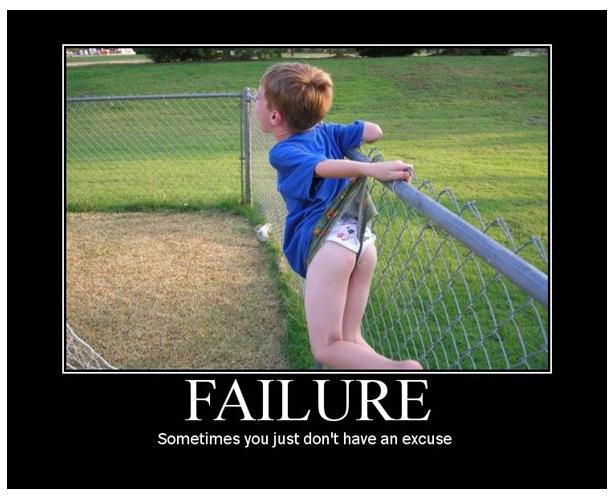
I did consider how inappropriate this was before posting it... but just couldn't help myself.
I certainly don't have it all figured out.
But who does, really?
That said, here's my final advice on Conflict Resolution...
Assuming that you've done all the pre-requisite reading of the previous 8 posts?
(Listed in the left column, if you want to now.)
I list things in steps, for ease of reading.
But I'm not always this organized in my process, and am not necessarily saying it needs to be so structured. Though having steps sometimes helps.
1) Go Through The Processing/Reflecting Phase First
First you need a chance to go through the anger thing. Then put yourself in someone else's shoes, enough to at least accept the possibility that:
A) You could be wrong
B) You could be missing some information
Sometimes when a rumor/conflict seems totally incredulous-rediculous-insane... it's because it isn't entirely true. And you could be missing a key part of the story.
But... you won't know that unless you give your (seeming) opposition a chance to give their side of the story.
2) Grow A Spine?
I've read in dream books that if you're being chased by a scary monster, and keep running, it keeps chasing you. But if you stop running and face your demons...
They lose all their power.
I've tried the dream thing- totally works!
Your social problems are the same.Running away only makes them chase you.
Trust me, I know howuncomfortableconfrontation can be! I should have a PhD in powering through uncomfortable situations, at this point...
But you know what?
Because once it's over, it's always SUCH A RELIEF that I encourage you to push past the discomfort to see what good communication feels like, on the other side of it.
3) Set Up A Meeting
This might seem laughable to you, if you've been embroiled in a heated debate that's already gotten nasty...
You might be afraid that the person would never-ever-in-a-million-years agree to that.
But I'll let you in on a human weakness nearly all of us have: It's almost impossible to resist free food.
So email the person (so they get a chance to weigh out the option) or ask, after practice if you can:
~Buy them lunch
~Buy them dinner
~Buy them coffee
~Buy them a drink
Whatever fits that person's personality best.
Think about it this way: Conflict Resolution might cost you... up to 30 bucks... But wouldn't you pay someone else $30 to make the problem go away?
Even if someone can't stand the sight of you, most of us are powerless to opportunity of free food.And it proves your willingness to work things out.
I teach this in one of my seminars, and wouldn't you know it... a skater used it on me recently!
I was like... Damn... you got me with my own tricks! But you know what? I liked her better by the end of lunch. Food can be magical that way.
4) Lay It On The Line
I like the vulnerability/honesty of statement/questions like:
When _____________ happens, I feel like _________________. Did I do something to piss you off?
~or~
I don't need to be your friend, if you don't want that. But... Does it always have to be weird between us?
Something like that.
Alpha Women can typically smell bullshit 10,000 miles away, so I don't recommend going over the top or starting w/ qualifying statements you don't really feel, like:You know I love you, but...
If it isn't true, don't say it.
You don't have to love, or even like each other, to come to an understanding and be respectful of each others differing viewpoints.
But it does help to be sincere in your good will.
When somebody is disrespectful, I know well that it goes against every human instinct of self-protection to reach out to them anyways.
But that's why, I believe, it can be so powerful and awesome to make the effort (and work things out) anyways.
Some of my best friends are people I initially had friction with.
It's true.
And there are a handful of people that, no matter how reasonable I tried to be, they wouldn't meet me half way. And that's their loss, because I'm an awesome friend to have.
But that's a handful out of thousands!!!So, for me, it's always worth the effort.
I hope this series helps you with your derby relations.
Try to consider our bigger picture in history. Yes, we're having a good time with roller derby.
But we're also creating a new chapter of Women's History.
There's never been such a world wide network of female owned and operated businesses like this... Let alone involving contact sports!
So, next time you're in the middle of some petty debate (trust me, 8 years later, each power struggle feels like a total waste of passion)....
Consider your position in history. It's a pretty rad one!
Why cheapen that?
Have a spectacularly-history-alteringly-significantly-abundantly-considerately-totally rad day!
Somewhere in one of the gazillions of self-help books I read (back in the day), was the concept of:
Address the Situation, and not the Person.
Elvis likes it.
On the one hand, it's kind of silly, right??
How can you not address the person... you kinda have to, in order to work things out!
But on the other hand, I love the idea that it's a situation that two parties aregoing through.
It leaves room for both parties come out the other side of it, together. Rather than one party fighting to somehow change the other.
There's a difference between Addressing A Situation the other personis aware of, and Addressing A Situation they are not.
Aware: two parties are actively in conflict
Unaware: one party is irritated/agitated/threatened by another, who is apparently not aware of their behavior.
Fun Fact: The majority of people who are acting with jerk-like behavior are not aware of it.
I'll give you an example of times I was unaware of my jerk-like behavior, and how two different people handled communicating that to me.
I've always had high standards, but when I was a younger coach, I was a little too iron-fisty about it.
One skater came up to me after a practice and said:
Hey, I get the whole tough love thing you're doing.But sometimes, you forget the love.
This skater hardly knew me at the time, but we remain very close friends to this day.
Yes, I was hurt by what she said. But I wasn't mad at her. I was mad at me.
She let me know in a way that was not threatening that I needed to reflect on my behavior.
And that, despite it, the door was open for us to be friends.
And I couldn't respect her more for that.
There was another skater who handled letting me know in... one of the most disrespectful ways possible:
She posted an open letter to me on the league message board, reaming me for...whatevershe was mad about.
There were false accusations, and an obvious incitement, inviting others to share their feelings about.... whatever it was about.
It obviously wasn't a very memorable topic. But I do remember exactly how I felt.
Yeah, this pretty much sums it up.
When you've been completely disrespected, how can you react any other way?
I did decide to choose the high road, though.
How?
Well, I had to take some time to process her attack, as I saw it.
Then I had to Address The Situation.
Because we were both now very much aware of the Conflict between us.
I set up a meeting with her, and tried to work it out, but all I could really do was cry.
I'll never forget her reaction. Baffled, she said:
You know, I really didn't expect this. I thought you were going to fight.
I had to explain to her, I don't get off on fighting. I prefer to get along.
Now all I could be was hurt, my genuine feeling.
I think she saw me differently after that, because we've been good friends without a fight between us since.
But, if I had come out fighting... instead of allowing myself to be genuine and vulnerable....
I'll break down some practical tools/steps to conflict resolution, but before I do... I would ask you to consider the contrast between these two approaches.
The difference between Confronting a Person and Addressing a Situation...
And have a shiny-happy-feel-good-terrific-RAD day!
Skipping all the pleasantries and getting right to the advice on The Process Of Conflict Resolution.
Oh yeah, it's a process.
The first part of the process is Addressing Yourself. The second part, in the next blog, will be Addressing The Situation.
Addressing Your Self Advice:
1) Acknowledge Your Feelings
Every living being gets pissed off. Even plants!
And that's ok.
Staying pissed off all the time is unhealthy.
But, if you try to ignore your feelings, it you try to "just let it go," it never really does go away does it?
I don't get pissed off about things that don't matter to me. So when I'm mad, I let myself be mad. But I put a time limit on it. Depending on how mad I am.
Like, if it's something small, I can be mad for an hour. If it's big, maybe a day. That's just pure madness time.
Just to let myself feel what I have to feel.
2) Cool The Fuck Down
If I immediately addressed every time something pissed me off, with no working to take the edge off it first...
Well, I'd be 22 all over again.
Something needs to be done, once the anger's allowed to surface, to clear it out of your system.
There's lots of ways to take the edge off, productively:
~Go for a run, skate, bike or swim
~Dump it all out on a piece of paper
~Take a shower
~Clean the house
~Dance to ridiculously loud music
You might notice I did not suggest "Call a friend," or "Go out for a drink."
For many, this might be the first thing thing they would do. For me, that usually proved to be unwise...
I'll leave it to you to draw your own conclusions on that one, though.
3) Reflect, Reflect, Reflect
Think about your desired outcome:
Is it to hurt the person you're mad at?
Is it to keep the anger mill going forever?
Is it to upset everyone else around you?
Or do you just want everything to be cooled down and normalized again?
In order to achieve "cool again" it helps to recognize the more vulnerable reasons why you're upset.
For example:
I used to take it personally when skaters would ask me a million questions about every new decision at league meetings.
And by personally: I mean I would get furious.
So I had to cool off and ask myself:
Why do I get so defensive when people ask questions??
While I was furious, I couldn't really address it.
But when I cooled off, and got to a more vulnerable place I realized: I think they're saying I'm a bad leader who makes bad decisions.
The truth was: nobody was saying that.
They're just intelligent women. And smart people ask questions.
Sometimes, when you get pissed off, the problem is not really the other person. It's an insecurity you have that needs to come out and be dealt with.
So reflection, before action or debate, is what I recommend.
What I don't recommend is arguing yourself into a fit of tears at league meeting. Not that I ever did that...
Oh, wait... yeah... I totally did do that once.
OK, twice.
So... that's a lot to take in, I know. I've had years to reflect on this and I'm not trying to dump it all into one blog post.
But the first step of every journey is looking inward, in my opinion.
Especially when it involves other Alpha Women!
Have a well-balanced-inwardly-and-outwardly-totally-kick-ass-crazy-radder-than-RAD day!